About Us
Treatments For an M-Shaped Hairline
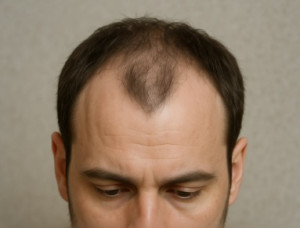
An M-shaped hairline is a common early pattern of hair recession, especially in men experiencing androgenetic alopecia. It can appear gradually, often becoming more noticeable in the late teens or twenties, and while for some it progresses slowly, for others it can be a source of significant anxiety. The pattern occurs when the hair recedes at both temples while the central forehead retains more coverage, forming an “M” shape. While it is not harmful, it can affect confidence and self-perception, and so understanding available treatments is key to making informed decisions.
Finasteride is one of the most widely studied medications for early male pattern hair loss and is frequently used to slow or halt further recession. It works by reducing levels of dihydrotestosterone, the hormone responsible for shrinking hair follicles in genetically sensitive individuals. Research published has shown that finasteride can significantly reduce hair loss progression in men aged 18 to 41. It is taken as a daily tablet, and most patients start to notice improvements after three to six months. Side effects are uncommon but can include reduced libido or mood changes, so careful discussion with a doctor is recommended. Topical finasteride is an alternative for those who prefer to reduce systemic exposure, although long-term data is still emerging.
Minoxidil, a topical solution available in liquid or foam form, is another treatment often recommended for early recession. Applied directly to the scalp, it increases blood flow to hair follicles and prolongs the growth phase of the hair cycle. Studies have demonstrated its effectiveness in promoting regrowth, particularly when used consistently for several months. Some patients find it helpful for thickening hair at the temples, where recession first becomes noticeable. It does need to be used continuously to maintain results, and some may experience mild irritation or shedding during the early stages of use.
For those with more established M-shaped hairlines, platelet-rich plasma (PRP) therapy offers a non-surgical option. This involves drawing a small amount of the patient’s blood, processing it to concentrate growth factors, and injecting it into the thinning areas. Evidence from clinical studies suggests it can improve hair density and thickness, particularly in patients with early to moderate hair loss. Treatment is usually carried out once a month for three sessions, followed by maintenance sessions every few months. Bruising and mild discomfort can occur, but serious complications are rare.
Hair transplant surgery is often considered when hairline recession becomes more advanced or when medical treatments alone are not enough. At My Hair UK, we use the FUE method, where individual follicles from the back or sides of the scalp are transplanted to the hairline. This approach leaves no linear scar and allows precise shaping of the hairline. Prices typically start from around £2,899 for up to 1,000 grafts and can reach £4,899 for 3,500 grafts depending on how much restoration is required. Results are permanent, although patients need to understand that surrounding non-transplanted hair may continue to thin and may still benefit from ongoing medical treatment.
Lifestyle measures can support treatment. Stress management, balanced nutrition, moderating alcohol intake and avoiding smoking are all advisable as part of a broader approach. While these steps will not reverse an M-shaped hairline, they contribute to overall scalp health and may enhance the effectiveness of medical treatments. Some individuals experiment with camouflage techniques such as hair fibres or hairstyles that reduce the contrast at the temples while undergoing longer-term treatments.
Before starting any treatment, it is sensible to visit your local GP for a general health check. Conditions such as thyroid disorders, anaemia or nutritional deficiencies can contribute to hair loss and should be ruled out or treated first. A GP can arrange blood tests, assess your medical history and confirm whether treatments such as finasteride or minoxidil are appropriate, especially if you have underlying health concerns or take other medications.
If medical causes are excluded and hair loss continues, a consultation at a specialist clinic like My Hair UK can help you explore transplant suitability and other options. As with any procedure, research the clinic thoroughly, for example you can see My Hair UK reviews on good review websites. expectations need to be realistic. An M-shaped hairline can be softened and reshaped, but over-lowering the hairline may not be advisable for long-term natural results, particularly if hair loss is likely to progress.
Research into treatments continues to evolve. A study published in Dermatologic Surgery found that combining PRP with medical therapy may offer better outcomes than either treatment alone. Emerging therapies such as low-level laser therapy are being studied, although their results vary. What remains clear is that early action gives the best chance of preserving hair, especially in those with a strong family history of hair loss.
Related Articles: